The Meisner Technique: A Practical Guide for Musical Theatre Performers
Sanford Meisner had one rule above all others: stop thinking and start listening. Not listening for your cue to speak — actually listening, the way you do when something genuinely matters to you, when you’re surprised, when you’re moved, when the person in front of you does something you didn’t expect. That kind of listening. The kind that produces real, spontaneous, unplanned behavior.
In musical theatre, where every word, note, and beat of blocking is pre-set, this might sound impossible. It isn’t. Meisner’s technique doesn’t ask you to abandon your preparation — it asks you to stop hiding behind it. The score is learned. The blocking is set. Now put all of that in your body, get out of your head, and actually be there with the other person on stage. What happens between you is the performance. Everything else is just infrastructure.
Who Was Sanford Meisner?
Sanford Meisner (1905–1997) was an American actor and acting teacher whose influence on the craft of performance is difficult to overstate. Born in Brooklyn, he originally trained as a concert pianist at what is now the Juilliard School — a musical background that would prove foundational to a technique built on listening, rhythm, and moment-to-moment responsiveness.
Like Stella Adler and Lee Strasberg, Meisner was a founding member of the Group Theatre in 1931 — the crucible of American acting technique that brought Stanislavski’s ideas to the U.S. stage. He worked alongside both of them, absorbed their approaches, and ultimately departed from both. Where Strasberg went inward into personal memory and Adler went outward into imagination and research, Meisner went between — into the space that exists between two actors in relationship, in the present moment, on the live stage.
He spent over fifty years teaching at the Neighborhood Playhouse School of Theatre in New York, where he refined his approach into one of the most rigorous, systematic, and ultimately liberating actor training programs ever developed. His students include Gregory Peck, Steve McQueen, Robert Duvall, Diane Keaton, Philip Seymour Hoffman, James Gandolfini, William H. Macy, Allison Janney, and Chadwick Boseman — actors defined not by their techniques but by their unmistakable, undeniable presence.
The Core of Meisner’s Approach
Everything in the Meisner Technique flows from a single definition that Meisner spent decades refining:
“Acting is living truthfully under imaginary circumstances.”
— Sanford Meisner
Not performing truthfully. Not feeling truthfully. Living truthfully. The distinction is everything. Living implies presence — being here, now, with this person, in this moment, affected by what is actually happening rather than executing what was planned in rehearsal.
The imaginary circumstances are the character, the play, the world of the production. But the living — the actual human behavior, the genuine response, the real impulse — that comes from you, in the moment, not from your preparation. Preparation opens the door. Meisner’s technique teaches you to walk through it without checking your notes.
His technique is built around five core principles and the exercises that develop them. Each one strips away a layer of self-consciousness and deposits you more fully in the present moment with your scene partner.
Meisner’s Five Core Principles
1. Listening and Responding
This is the foundation of everything Meisner built. Not listening as a passive act — waiting for your cue — but listening as a fully active, fully present engagement with another human being. Meisner believed that the most powerful thing an actor can do is be genuinely affected by what their scene partner does, says, and feels. When you are truly affected, your response is real. When your response is real, the scene is alive.
This requires radical attention. Your scene partner’s body language, the quality of their breath, the unexpected catch in their voice, the split second of hesitation before a line — all of it is data, all of it affects you, all of it shapes what you do next. Most actors are too busy managing their own performance to notice any of it. Meisner’s training is designed to break that habit permanently.
2. The Repetition Exercise
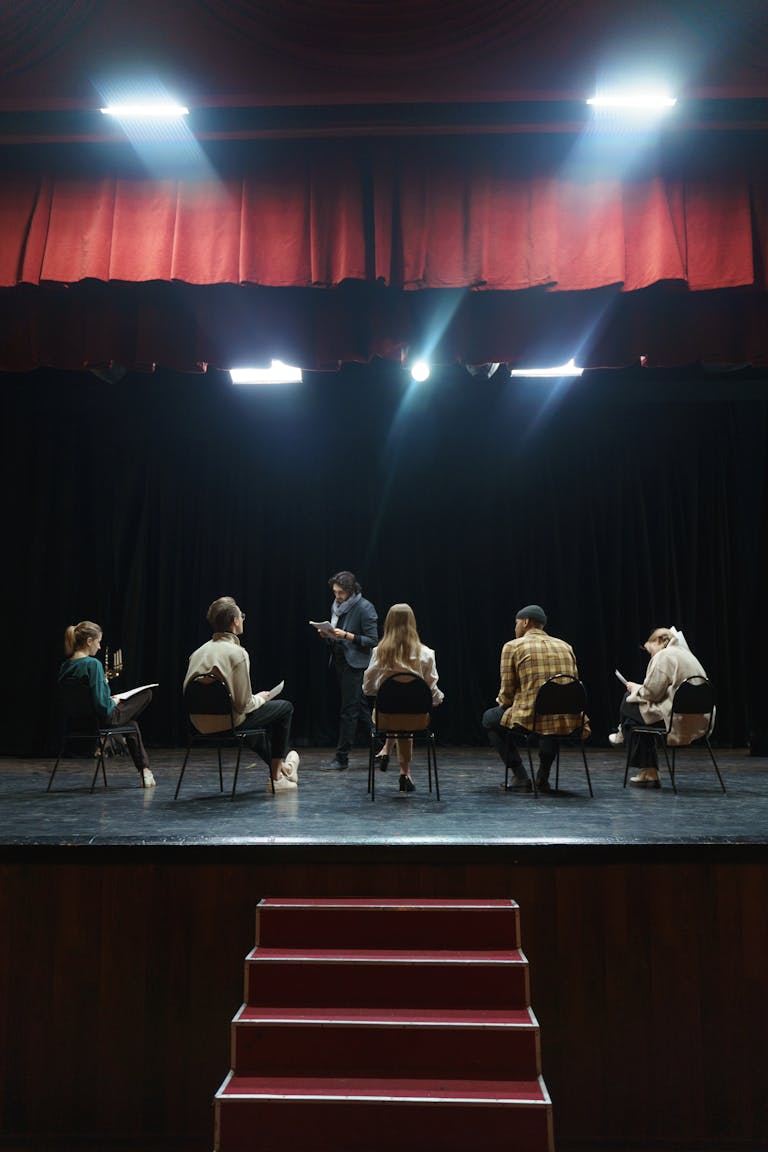
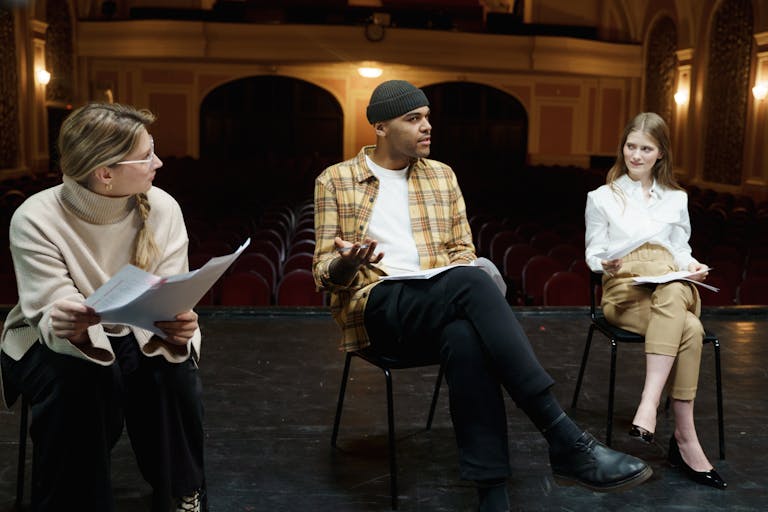
The repetition exercise is the central training tool of the Meisner Technique — deceptively simple on the surface, profound in its effect. Two actors sit facing each other. One makes a simple observation about the other: “You’re smiling.” The other repeats it back: “I’m smiling.” The first actor responds to that response: “You’re smiling.” Back and forth, again and again, with no plan, no agenda, no performed emotion.
What sounds like an absurd party game becomes, over weeks and months, one of the most powerful tools in actor training. As the exercise progresses, the phrase shifts — not because either actor decides to change it, but because something genuinely shifts between them. One actor hesitates. The other notices. “You’re nervous.” “I’m nervous.” Now something real is in the room. The repetition has stopped being an exercise and become a living exchange.
The purpose is to train the actor to stop performing and start perceiving — to locate their attention entirely outside themselves, on the other person, and respond to what is actually there rather than what was planned.
3. Emotional Preparation
Meisner understood that you cannot simply walk on stage and expect to be emotionally alive. The instrument needs to be warmed up before the first moment of the scene. Emotional preparation is the private, pre-performance work that brings the actor to an emotionally activated state — ready to be affected, ready to respond, ready to live.
Crucially, emotional preparation in Meisner’s framework is not about identifying what emotion you’ll perform. It is about arriving in an emotional state that makes genuine response possible. Meisner encouraged actors to use their imagination — daydreaming, fantasizing, building a vivid inner scenario — rather than excavating personal trauma. The goal is activation, not performance. Once the scene begins, you release the preparation and turn your full attention to your partner. The preparation has done its job; now the moment takes over.
4. The Independent Activity
The independent activity is an exercise in which the actor performs a specific, personally meaningful task — repairing a broken object that belonged to someone they loved, writing an urgent letter, preparing something with high personal stakes — while another actor interrupts them. The task must be difficult enough to require real concentration, and the stakes must be genuine: if you don’t complete this, something you care about is lost.
The exercise teaches two things simultaneously. First, it develops the ability to be genuinely occupied — to actually do something on stage rather than perform the idea of doing it. Second, it creates the conditions for authentic interruption: when you are truly absorbed in something that matters, another person’s arrival produces a real response, not a planned one.
This is the Meisner principle that acting is not talking. Acting is doing — and doing something specific, with real stakes, that your full attention is committed to. Everything else — including your scene partner — arrives as an interruption of that reality.
5. Public Solitude
Public solitude is Meisner’s term for what Strasberg called the “private moment in public” — the ability to be genuinely alone in your inner life, fully absorbed in the reality of the scene, even while hundreds of people watch you from the dark. It is the opposite of performing-for-the-audience and the antidote to self-consciousness.
The actor who has achieved public solitude is not thinking about the audience. They are not managing their performance. They are not aware, in any functional way, that they are being watched. They are simply present — in the scene, with their partner, in the moment. The audience watches a person living, not an actor acting. This is the state Meisner’s entire technique is designed to produce.
Meisner and Musical Theatre: The Missing Link
Here is the central problem Meisner solves for musical theatre performers: you have rehearsed this show for six weeks. You know every note, every word, every cross. You know where the laughs are, where the tears are, where the standing ovations happen. And because you know all of this, you are in constant danger of performing the memory of the show rather than living it in the present tense, eight times a week, with real human beings in the room.
Meisner’s technique is the antidote to that danger. It doesn’t ask you to forget your preparation — it asks you to trust it so completely that you can put your attention somewhere else: on your scene partner, on the live human exchange happening right now, on what is actually in the room tonight rather than what was in the room at the final dress rehearsal.
The shows that feel alive — the performances audiences talk about for years — are the ones where something real is happening between the people on stage. That aliveness isn’t luck. It’s a skill. Meisner’s technique is how you build it.
Applying Each Principle to Musical Theatre
Listening: Stop Waiting for Your Cue
Most musical theatre performers listen just enough to know when to come in. They hear the last word of their partner’s line — the cue — and the machinery of their own performance takes over. Meisner calls this acting “from the neck up.” You are managing information, not living in relationship.
The practice: In your next rehearsal, make one commitment: let your scene partner actually land on you before you respond. Don’t pre-load your next line while they’re still speaking. Don’t start forming your response before they’ve finished. Let what they’re doing genuinely affect you — even if it’s the hundredth time you’ve heard it. Ask yourself, in the moment before you respond: what did they just do to me? Not what are they supposed to do, not what did they do in Tuesday’s rehearsal — what did they just do right now? Then respond from that.
This is harder than it sounds, and the results are immediate and visible. A scene partner who is truly listening reads completely differently than one who is waiting. The audience feels it, even when they don’t know why.
Repetition: A Musical Theatre Adaptation
You can’t run the full Meisner repetition exercise with a scene partner in most rehearsal settings — it requires dedicated, undirected time and a willingness to look ridiculous before it starts working. But you can use its core principle in your musical theatre work right now.
The practice: Take a duet or scene you’re working on and run it with this single rule: you are only allowed to respond to what your scene partner actually does in this run — not what they’ve done before, not what you expect them to do, not what the blocking says. If they do something different — a new impulse, a shifted rhythm, an unexpected moment of stillness — let it change you. Don’t protect the version you rehearsed. Let the live human in front of you be more interesting than your plan.
Run it this way repeatedly. Notice what becomes available when you stop managing the exchange and start participating in it.
Emotional Preparation: Arriving Ready
In musical theatre, the first moment of a scene or song is often the most dangerous. You’ve been standing in the wings thinking about your mic, your quick-change, the high note in the second chorus. You walk on stage technically ready and emotionally nowhere. The first thirty seconds of the scene are spent catching up to where the character needs to be, and the audience notices — even if they can’t name what’s off.
The practice: Develop a specific emotional preparation ritual for each of your major entrances. Before you walk on stage, spend 60–90 seconds in a vivid, personal daydream — not a memory, not a recalled emotion, but an imagined scenario that activates the emotional state your character needs in this moment. Make it specific and sensory: who is in the scenario, what are they saying, what is at stake? Let the fantasy do its work. Don’t chase an emotion; let the imagination generate it.
The moment you step on stage, release the preparation entirely. Put your attention on your scene partner. The emotional state has been activated; now let it be shaped by what’s actually happening in the room, not by the scenario you used to generate it.
Independent Activity: What Are You Doing When the Song Begins?
One of the most common questions a musical theatre director faces: why does the character start singing here? The conventional answer is “because the emotion is too big for words.” But Meisner’s framework gives you a more actable answer: because the thing you were doing has reached a point of urgency that requires a different form of expression.
The practice: For every song you perform, identify what your character is doing in the moment immediately before the song begins — not just where they are emotionally, but what they are physically, actively engaged in. Give that activity genuine personal stakes. Now ask: what happens in this moment — what arrives, what shifts, what becomes undeniable — that makes this the moment the song must happen?
For “The Music of the Night” from Phantom of the Opera, the Phantom is not simply being seductive. He is showing Christine something — a specific world he has built, that he believes in completely, that he is genuinely trying to give her. The song begins because the offer has been made and the stakes of her response are everything. For “I Dreamed a Dream” from Les Misérables, Fantine is not performing grief. She is doing something with that grief — she is measuring the distance between what was and what is, and finding it unbearable. The song begins because the doing of that measuring reaches a point that words alone can no longer hold.
The activity — the specific, staked doing — is what makes the song’s arrival feel inevitable rather than scheduled.
Public Solitude: Singing As If No One Is Watching
This is the principle that transforms a competent musical theatre performance into an unforgettable one — and it is the hardest to achieve precisely because musical theatre is, by design, a presentational art form. The lights are on you. The mic is on you. Two thousand people are watching you. Everything in the environment is screaming “perform.”
Public solitude is the ability to be genuinely private inside that environment. Not turned away from the audience — the staging exists for a reason — but internally absorbed in the reality of the scene to the degree that the watching stops mattering. You are with your scene partner, or inside your character’s private world, and the audience is watching that private reality rather than a performance of it.
The practice: The next time you run a song in rehearsal, choose one specific person or object your character is addressing — someone real in your imagination, someone whose response genuinely matters to you in this moment — and sing it entirely for that person. Not for the director. Not for the back row. For this one specific presence. Notice how the song changes when the audience is no longer the target. Notice how much more the audience receives when they’re not being aimed at.
Public solitude is the destination. Every other principle in this list is the path to get there.
Putting It Together: A Meisner Prep Framework for Musical Theatre
Here is a repeatable framework you can bring into any rehearsal or performance process:
- Know your material cold — Meisner only works when the technical demands are fully internalized. You cannot listen to your scene partner while you’re searching for your next line. Learn it until it lives in your body, not just your brain.
- Build your emotional preparation — In the 60–90 seconds before your entrance, run your specific imagined scenario. Activate the emotional state. Don’t perform it — just let the daydream do its work.
- Identify your independent activity and its stakes — What is your character doing when the scene begins, and why does it matter desperately? The more specific and personally staked, the more real the arrival of the song or scene will feel.
- Release the preparation and find your partner — The moment you step on stage, the preparation is done. Put your full attention on the other person. What are they actually doing right now? Let it land on you.
- Respond, don’t perform — Every line, every note, every move: let it be a response to what’s actually in the room, not a execution of what you rehearsed. The rehearsal is what makes the response possible. The response is what makes the performance alive.
- Protect your public solitude — Stay in the private reality of the scene throughout. The audience is watching your private world. The moment you start playing to them, they stop believing it.
This framework compresses with practice. What takes twenty minutes of conscious preparation in early rehearsals becomes a rapid, reliable activation sequence by opening night — one that gives you access to genuine present-moment behavior every single performance, not just the ones where the magic “happens to be working.”
Meisner, Strasberg, and Adler: Which Do You Need?
By now you’ve encountered all three of the great American acting techniques. Here is how they fit together in a musical theatre context:
Use Adler to build the world. Research the given circumstances. Build the imagined environment. Find the action verb that gives the song its spine. Adler’s tools are the foundation — they give your imagination something concrete to work with before you ever step into a rehearsal room.
Use Strasberg to deepen the emotional access. When a song’s emotional stakes are close to your own experience, affective memory and sense memory give you direct, reliable access to genuine emotional states. Use these tools in rehearsal, not performance — as preparation, not execution.
Use Meisner to keep it alive every night. Once the world is built (Adler) and the emotional door is open (Strasberg), Meisner’s principles are what prevent the performance from calcifying into repetition. Listening, responding, public solitude — these are the tools that make the 47th performance as truthful as the first.
The smartest musical theatre performers don’t choose one technique — they use all three, at the right moment, for the right purpose. That is what it means to have a craft rather than a habit.
Frequently Asked Questions
How do you use Meisner when everything in a musical is pre-set?
The pre-set elements — blocking, choreography, score — are the container. Meisner’s principles operate inside that container. The words don’t change, but your response to what your scene partner does in this specific performance does. The staging stays fixed, but your genuine perception of what’s happening between you is alive and unrepeatable every night. The technique doesn’t require freedom from structure; it requires genuine presence within it.
How long does Meisner training actually take?
Meisner famously said that his technique takes two years to learn. The full repetition-based training sequence is a long-term investment, not a weekend workshop. That said, the individual principles — listening, emotional preparation, public solitude, identifying your independent activity — can be applied to your work immediately, and the results show up quickly. You don’t need to complete the full training sequence to benefit from the approach.
Is the Meisner technique better suited to straight plays than musicals?
It’s a common assumption — and it’s wrong. The listening, presence, and partner-responsiveness that Meisner develops are at least as valuable in musical theatre as in any other form. The heightened world of the musical actually requires more genuine presence between performers to work, not less. The song is believable when something real is happening between the people singing it. Meisner’s technique is precisely what keeps that realness alive across a long run.
Can I combine Meisner with Adler and Strasberg?
Yes — and this is the approach most working musical theatre performers eventually arrive at. Adler builds the world and finds the action. Strasberg opens the emotional door. Meisner keeps the performance alive and present every night. They are not competing systems; they address different moments in the actor’s process and complement each other naturally.
Work On This With a Coach
Understanding Meisner’s principles in theory is a starting point. Applying them to your actual show, your actual audition material, and your actual performance habits — and having someone identify specifically where you’re managing your performance instead of living it — is where the real work happens.
Book your free 30-minute Zoom assessment and let’s find out exactly where your listening stops and your performing begins — and how to close that gap.
David Anthony is a Long Beach-based vocal and acting coach with 20+ years of experience training musical theatre performers. He holds degrees from Berklee College of Music and BerkleeNYC and has trained singers and actors performing on Broadway, national tours, and in top musical theatre programs across the country.